


Catchment area
The agrupamento de escolas of your registered address is the default. Proof of residence (lease, utility bill or tax address) is what the portal uses.




Every child living in Portugal has the right to education. Public pre-school, basic and secondary schooling is free for residents, and a school cannot refuse a place because of the family's immigration status.
Enrolment for public schools runs through the national Portal das Matrículas. Your registered address (área de influência) decides which school group you apply to first. Families arriving from a foreign system attach the school reports to the same file — the grouping then processes the equivalência de habilitações.
Eagles Ocean Blue maps the agrupamento around your home, prepares and legalises the documents, files the enrolment on time and follows the language-support class (PLNM) your child is entitled to.
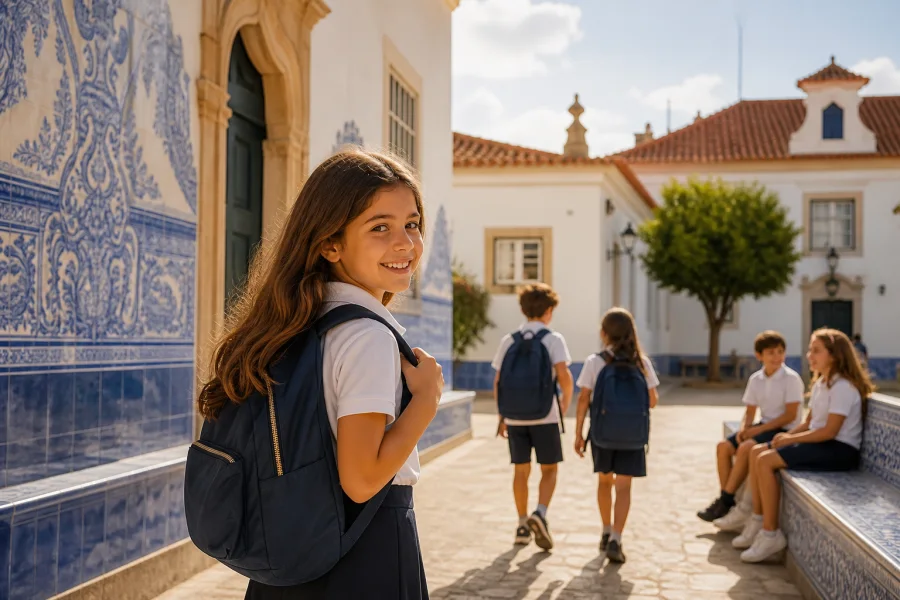
School is compulsory from age 6 to 18. Pre-school is optional but strongly recommended and is free in the public network when a place is available.
Kindergarten in jardins de infância, often run by the municipality or an IPSS. The first enrolment window of the year usually opens in April for September.
Years 1 to 4 of ensino básico. The 1st-year window is one of the tightest — popular Lisbon and Cascais groups fill quickly.
Years 5–6 then 7–9. Children arriving from abroad are placed after the school assesses their reports and Portuguese level.
Years 10–12, general or vocational tracks. The diploma (and national exams) is what Portuguese universities look at.
The agrupamento de escolas of your registered address is the default. Proof of residence (lease, utility bill or tax address) is what the portal uses.
Windows differ by grade. Pré-escolar and year 1 usually open first (April–May). Later years follow in June and July. Confirm the current year on gov.pt before you file.
Foreign reports are recognised under Decree-Law 227/2005. The request is filed at the school of enrolment, with apostilled originals and a certified Portuguese translation.
Start the Portal das Matrículas file with the foreign record attached. Final enrolment is completed once equivalência is granted — waiting for it first often means missing the window.
Register the family at the address you will actually live at. That address sets the school group and is checked against tax and municipal records.
Dates change every school year and by grade. We check the live Portal das Matrículas / gov.pt calendar for your child’s year before anything else.
Birth certificate and school reports from outside the EU need an apostille (or consular legalisation) and a certified translation into Portuguese.
We submit through portaldasmatriculas.edu.gov.pt, keep the receipt and the reference number, and attach the foreign reports for equivalência.
The agrupamento sede runs the recognition (subjects, grades and grading scale must appear on secondary certificates). Non-residents apply to the DGE in Lisbon instead.
Once the place is assigned we finalise registration and the school starts the Portuguese-language assessment for PLNM support.
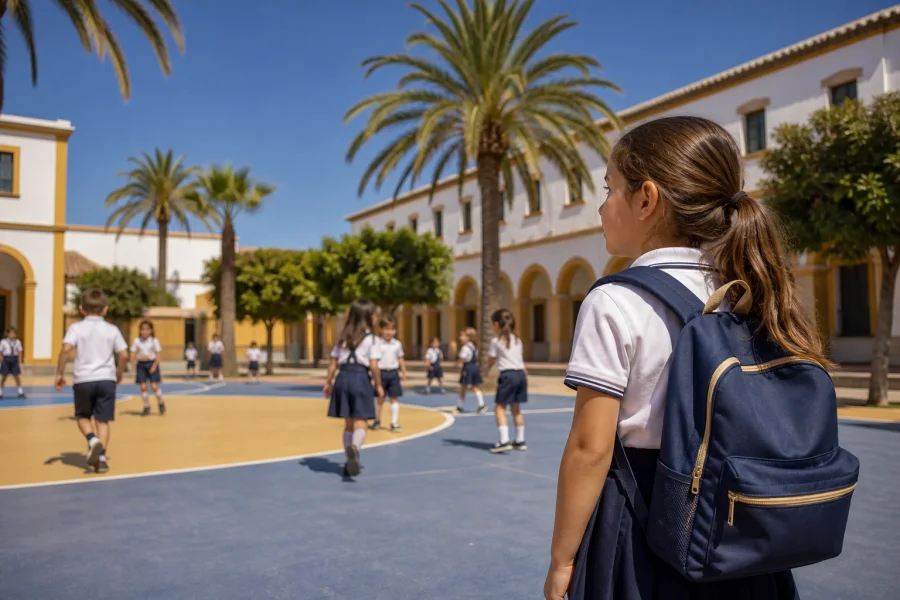 Schools in Spain
Admission is organised by each autonomous community. Your municipal registration (padrón) sets your catchment zone and the points that decide the place. Families arriving mid-year are placed through the local schooling commission.
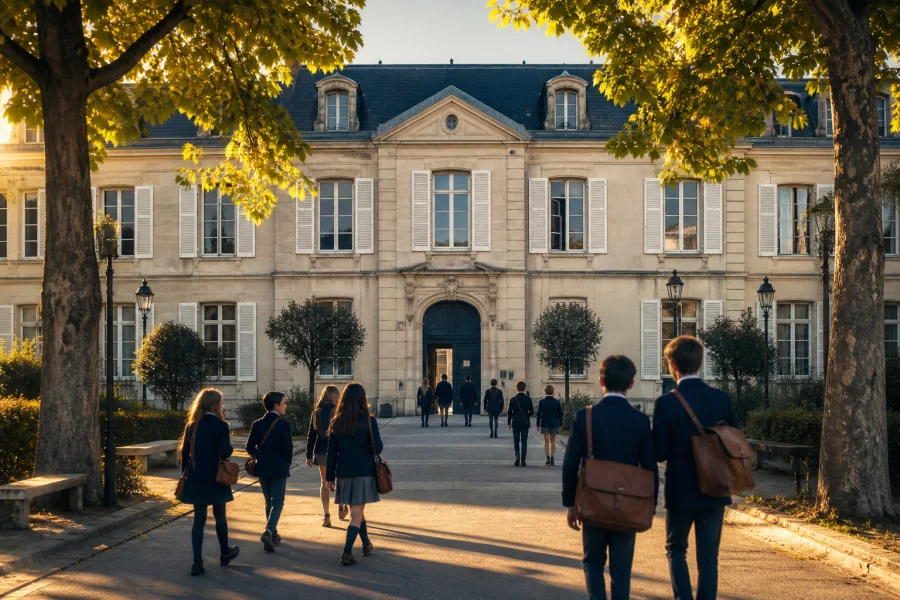 Schools in France
For maternelle and élémentaire you register at the town hall, which issues a certificate for the assigned school. For collège and lycée the académie assigns the school after a level assessment, usually organised through the CASNAV.
Tell us your city or concelho, your child’s age and current school year — we will map the agrupamento, the next window and the documents you still need.